


The Septuagint and the Masoretic Text of the Bible agree on nearly every passage. But there are two chapters in Genesis in which there are major differences. Those are Genesis chapters 5 and 11, which record the chrono-geneologies from Adam to Abraham. The Septuagint is about 600 years longer for the period before the Flood, and is 780 to 800 years longer for the period from the Flood to Abraham, with small variations between manuscripts. Most of the differences are found as the age of the begetting patriarch being 100 years higher or lower. Thus it is obvious that someone altered the text by systematically either adding or subtracting 100 years to the ages of the patriarchs. But which set of numbers was the original is hotly debated.
The 800-year difference between the time from the Flood to Abraham is of critical importance when attempting to build an accurate chronology of ancient history. Some Christian scholars, such as the Associates for Biblical Research prefer the longer chronology of the Septuagint, in part, because it is more compatible with their preferred chronology of ancient Egypt.
One of the ABR staff members, archaeologist Henry Smith, has recently started making the claim that the Septuagint preserves the original numbers of the paleo-hebrew text, and the Masoretic Text was deliberately deflated by the Jewish rabbis between the destruction of the Temple in AD 70, and the Bar Kochba War (AD 132-136) to make the chronology of the Old Testament point to Simon Bar Kochba as the Messiah.1
While, Smith’s claim is partially true - Rabbi Akiba and his colleague Ben Halafta definitely altered the chronology of the Persian Empire when they published the Seder Olam Rabbah in AD 132. The Seder Olam Rabbah was eventually incorporated into the Babylonian Talmud and has become the traditional Jewish calendar and chronology of the world. The two rabbis who published the Seder Olam deleted more than a century of the Achaemenid Persian Empire to make the time from the decree of Cyrus to the rise of Bar Kochba exactly 490 years.
Thus Akiba and Halafta definitely modified history to make Bar Kochba appear to be the fulfillment of the Prophet Daniel’s 70-week prophecy to the Messiah (Daniel 9:24-27). However, they did so in a manner that did not require altering the Hebrew text of the Old Testament. The Old Testament does not give us a chronology of the Persian Empire. The Babylonian Jews used the Seleucid Era of 312 BC for their business contracts. So Akiba and Halafta could only delete years from the period between the end of the Old Testament and the start of the Seleucid Era. So they deleted nearly two centuries from the Persian Empire.
The question is whether the changes to Genesis 5 and 11 were made at the same time and whether they served the same purpose. Most Christian scholars have believed that the Septuagint added eight centuries to the original Hebrew text rather than deleting them. This topic has begun trending lately in various discussions about the relationship of Christianity to modern Judaism. So, I think it is important to address it.
Below I will argue that early Aramaic translations of the Old Testament by the Christian Jewish community in Antioch predated the Seder Olam and therefore prove that there was an older Hebrew manuscript tradition with the shorter numbers found in both Jerome’s Latin Vulgate and the much later Masoretic Text.
Background on the Various Manuscripts of Genesis
The Greek translation of the Old Testament is called the Septuagint. It is sometimes abbreviated as LXX, the Roman numerals for 70, because it was allegedly translated by seventy rabbis in the reign of Ptolemy Philadelphus in Alexandria, Egypt in the third century before Christ.
The Jewish copies of the Old Testament today are based on the Masoretic Text. The Masoretes were Jewish scribes in the Middle Ages who made copies of Hebrew scrolls for synagogues. In the Roman Era, written Hebrew using the Aramaic Square Script only included the consonants of most words. Since several possible words could have the same consonants, the reader had to guess the vowels based on the context.
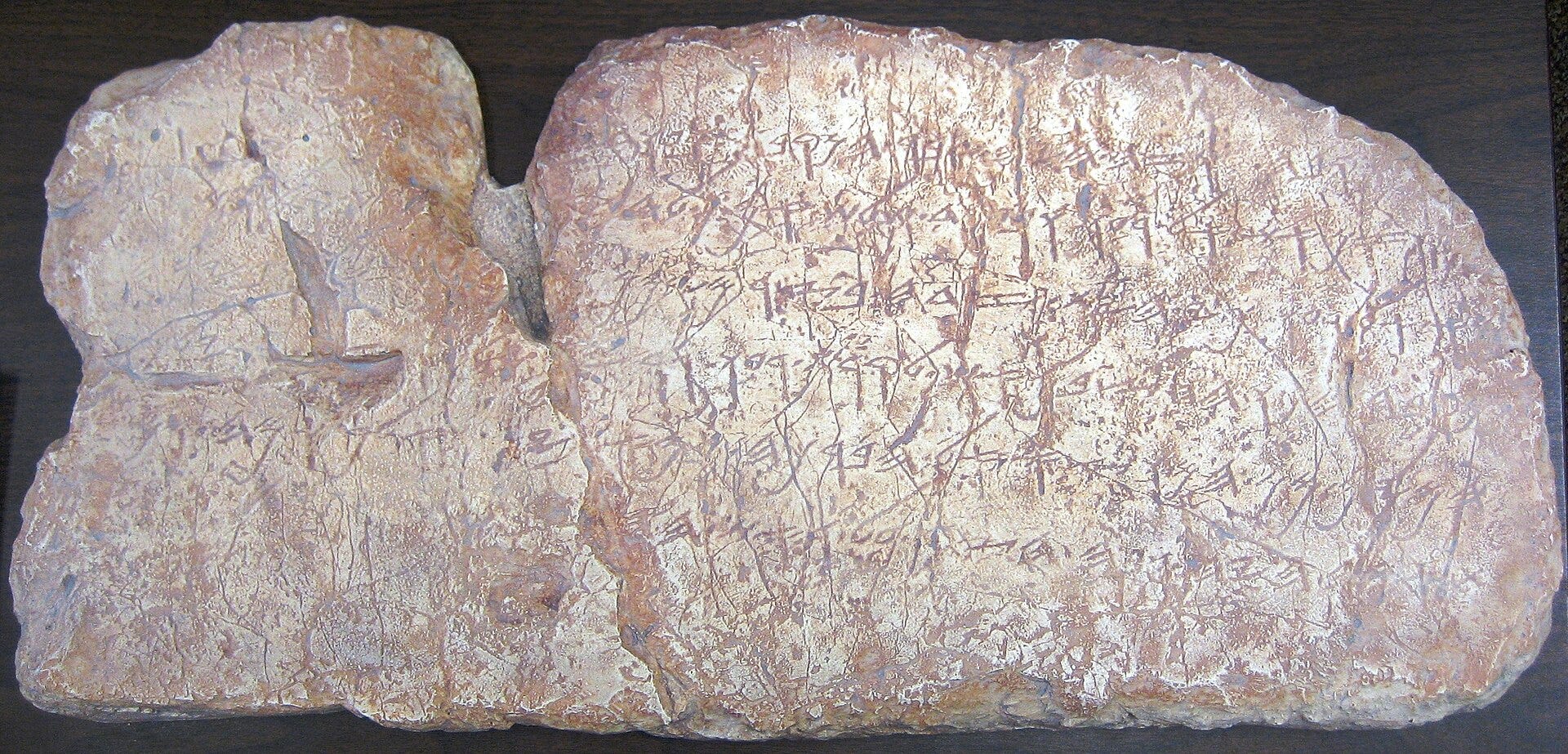
To put this in context, imagine that English had no vowels. WRD could mean any of the following: “word”, “weird”, “worried”, or “wired.”
The Jewish Masoretes invented vowel points for Hebrew in the Middle Ages to supply the missing vowels. However, some scholars such as Michael Rydelnik argue that the Masoretes may have deliberately substituted the wrong vowels in certain cases to change the meanings of prophecies that pointed to Christ and were quoted by the Apostles in the New Testament.2
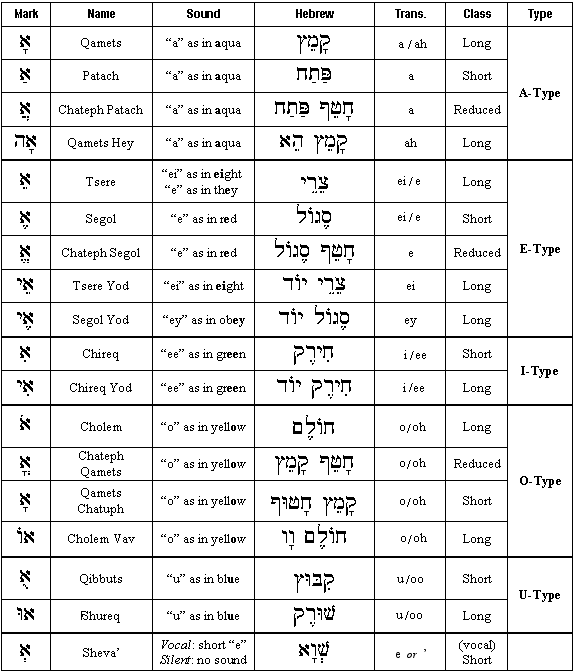
Because Jewish rabinnical tradition required damaged Torah scrolls to be replaced and the old worn ones to be burned, ancient Hebrew manuscripts are exceedingly rare. The oldest copy of the Masoretic Text is the Leningrad Codex which dates to about AD 1000.
This raises a question for Christians — if the only copy of the Hebrew Old Testament came from rabbis who deliberately altered the meanings of some of the passages, how do we know that we have the real Bible?
Thankfully, some much older manuscripts of both the Hebrew text and translations into Aramaic and Latin have been preserved. For example, the Dead Sea Scrolls included a full copy of Isaiah that dates to the third century before Christ. The Great Isaiah Scroll (1QIsaᵃ) has a few minor differences in spelling but for the most part agrees with the Masoretic Text, which informs us that the Hebrew text was stable for a period of at least 1,000 years. However, there is an example of using the vowel points to change the meaning found in the passage quoted by Matthew 1:23.
In the final clause, MT is traditionally vocalized “she will call his name Immanuel,” whereas 1QIsaᵃ writes a form that can be read “his name will be called”—a formulation closer to the passive-style clause in Matthew, “they shall call his name Immanuel.” The LXX reads “you shall call,” so it is not identical to either. The variation in the reading does not seem particularly material to whether the Isaiah prophecy referred to Christ. So on this verse at least, there is no evidence of a Jewish conspiracy to alter the meaning of the text. Other passages may have stronger evidence of such a claim, but that is not the point of this post.
There are four other manuscript traditions for Genesis that are highly relevant to the question of the chrono-geneologies. These are the Samaritan Penteteuch (SP), Jerome’s Latin Vulgate (LV), and the Syrian Peshittas, and the Jewish Aramaic Targums.
The Samaritan Penteteuch
In Antiquities of the Jews 11.302–347, Josephus says that Manasseh, brother of the Jerusalem high priest Jaddua, married Nikaso, daughter of Sanballat, the governor of Samaria. Jerusalem’s priestly authorities required him to divorce her or lose his priestly position. Sanballat offered instead to build a rival temple on Mount Gerizim and make Manasseh its high priest. Manasseh accepted; other Jerusalem priests and Levites who had problematic foreign marriages joined him. The Gerizim sanctuary thereby became, in Josephus’s polemical narrative, a breakaway Judean priestly establishment rather than an ancient Israelite sanctuary in its own right.
Christian scholars have hypothesized that the Samaritan text of the Old Testament was taken by Manasseh to Samaria and edited, particularly the chrono-geneologies. The Samaritan text also adds several centuries from the Flood to Abraham, but less than the full eight centuries of the Septuagint. If true, then the SP dates to the late fifth century before Christ.
The Syriac Peshitta
Antioch, Syria had a community of Christian Jews that grew up around the teaching of the Apostle Paul who took refuge in Antioch some time after his conversion (Acts 11:26). While the later Jewish Wars completely destroyed the Jewish communities and institutions in Galilee and Judea, Antioch was a refuge for the Christian Jews that was spared from destruction in those wars. Consequently, Antioch had an unbroken Christian-Jewish tradition that dated from the personal teaching of the Apostle Paul around AD 45 down to the Muslim Conquest in AD 637. This is highly relevant to the question of whether the rabbis altered the texts of Genesis 5 and 11.
The Christian Jews of Antioch spoke Aramaic, and they translated the Hebrew Old Testament into Aramaic early in the second century, around the same time that Smith claims the rabbis were deflating the geneologies of Genesis in the Hebrew texts. The Aramic translation of the OT is called the Peshitta, and the oldest extant manuscript of Genesis in the Peshitta dates to AD 463, which more than five centuries older than the Leningrad Codex of the Masoretic Text.
The Peshitta agrees with the MT for Genesis 5 and 11, which suggests that the Hebrew Vorlage used by the Christian Jews in first and second century Antioch was a prototpe of the much later Masoretic Text.
Jerome’s Latin Vulgate
Jerome was a Roman Catholic priest and linguist who traveled to Antioch and Jerusalem, learned Hebrew, and translated the Old Testament of the Latin Vulgate Bible directly from Hebrew manuscripts.
In his correspondence with St. Augustine, Jerome did voice suspicion that Jews might have altered or omitted passages relevant to Christian claims, yet his settled scholarly program was to translate from the Hebrew he called Hebraica veritas (“Hebrew truth”), not to reject it as generally corrupt. He expressed these concerns most notably in correspondence with Augustine of Hippo, who pressed him to identify exactly which Jews had altered which text.
The key exchange is:
Augustine, Letter 71 (to Jerome; traditionally numbered 104 in Jerome’s letters), written c. 403: Augustine questioned Jerome’s Hebrew-based revision and warned that local Jews might dispute his translations.
Augustine, Letter 82, §34 (to Jerome; traditionally Jerome Letter 116), written c. 405: Augustine explicitly refers to Jerome’s claim that translating from Hebrew could disclose things “omitted or perverted by the Jews.” He then demands clarification: did Jerome mean pre-Christian Jewish translators, or Jews after Christ who allegedly corrupted texts to evade Christian arguments?
Jerome, Letter 112, §20 (to Augustine, c. 404): Jerome defends translating according to what he found in Hebrew and as understood by Hebrew speakers. Augustine’s line of questioning was therefore directed at Jerome’s own earlier or recurring language about Jewish omission/tampering.
The fact that Jerome was aware of the possibility of Jewish tampering with the text, and yet still produced the Latin Vulgate Bible where the text of Genesis 5 and 11 agree with both the Syriac Peshitta and the much later Masoretic Text strongly suggests that during his time in Antioch Jerome had access to early Hebrew manuscripts that had a secure chain of custody back to Apostolic times through the local Christian-Jewish community church.
The Jewish Targums
The non-Christian Jewish community in Syria and Judea also translated the Old Testament into Aramaic. Their translations are called Targumim, or Targums. The oldest extant targum, Targum Onqelos, is dated to the seventh century, making it four or five centuries older than the Masoretic Text. Like the Peshitta and the Latin Vulgate, it agrees with the MT for Genesis 5 and 11. However, an older portion of a Targum was found at Qumran, indicating that the oldest Targum was translated before the Advent of Christ.
The Dead Sea Scrolls
While the Dead Sea Scrolls date to the first to third centuries before Christ and have preserved many important books and passages of the Old Testament, sadly, no scrolls with Genesis 5 or 11 have survived.
Chrono-geneologies: Deflated or Inflated?
The Creation History blog is primarily about ancient history and chronology. One of the most significant differences between the Septuagint and the Masoretic Text is the ages of the patriarchs when their sons were born in the 5th and 11th chapters of Genesis. These passages are referred to as the chronogeneologies, because they give us a chronology through the geneology from Abraham back to Noah, and from Noah back to Adam.
In the Septuagint, the total number of years from the Flood to Abraham in Genesis 11 is 780 years longer than the 352 years in the Masoretic Text. The LXX also gives a longer period of 580 to 600 years from Adam to the Flood in genesis 5.
A Christian archaeologist, Henry Smith, has published several papers and posts in the past decade arguing that the anti-Christian Jews who supported the Bar Kochba Rebellion deliberately deflated the chronology of the Old Testament to produce what later became the Masoretic Text. Smith argues that the long chronogeneologies of the septuagint (LXX) were the original numbers in the text, and that the Jews altered them around the time of the Bar Kochba Rebellion, to make all the numbers point to Bar Kochba as the Jewish Messiah.
Smith’s argument is tendentious because he needs it to support his chronology of ancient Egypt. But, given there is evidence that the Masoretes who gave us the Masoretic Text may have altered certain prophecies that clearly pointed to Christ, let’s give his argument a fair examination.
There are three strong arguments against Smith’s position that the anti-Christian rabbis deflated Genesis 5 and 11.
First, the three oldest manuscript witnesses to the Hebrew Vorlage of the first century Old Testament, the Peshitta, the Vulgate, and the Targum Onqelos, all agree with the Masoretic Text for Genesis 5 and 11. The older two of these three witnesses were translated by Christians who would have rejected any changes by rabbis intended to discredit Jesus Christ as the Messiah. The Peshitta was probably translated by Jewish Christians before the Bar Kochba Revolt and the creation of the Seder Olam chronology.
Second, Isaac Cullimore pointed out in 1835 that all of the variant chronological manuscripts, including the Samaritan Penteteuch, and the two major codices of the Septuagint, appear to have been using the same scheme to “correct” the Biblical chronology to agree with their “modern” astronomical calculations for the date of the Flood.
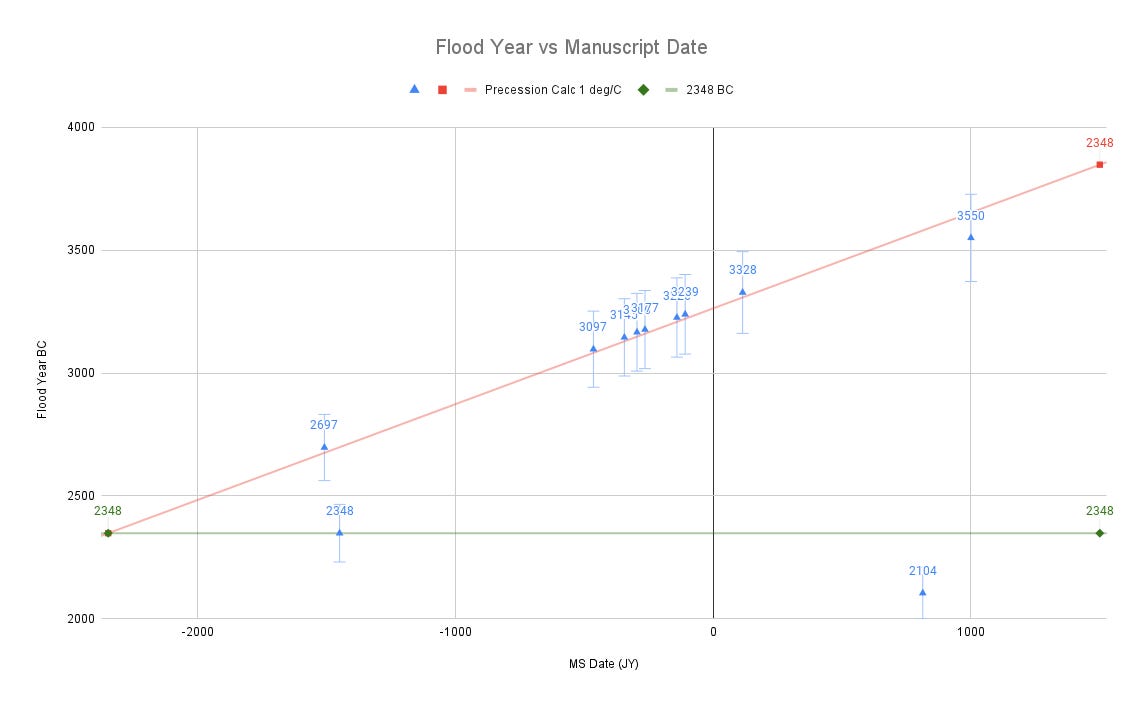
The Babylonian estimate of the rate of precession was 1 degree per century. A more accurate modern calculation is 1 degree in 71.5 years. The Jews and other ancient cultures of the Mediterranean region knew that the Flood had occurred when the Vernal Equinox was in the constellation of Pleiades. They could calculate the elapsed years since the flood by measing the number of degrees from the Vernal Equinox in their time, to the constellation of Pleiades, and then multiplying by 100 years.
The problem was that their estimate for the rate of precession was not sufficiently accurate. Using 1 degree per century added about 40 years per century that had elapsed since the Flood. The more time that had elapsed, the greater the error would become. When one looks at the various manuscripts, the earliest of which was the Samaritan Penteteuch, the later versions kept adding more years between the Flood and Abraham.
When plotted on a chart, all of the variant manuscripts fall nearly exactly on the line for 1 degree per century precession as shown below. Cullimore’s discovery supplies the motive for the editors of both the Samaritan Penteteuch and the Septuagint adding the extra centuries between the Flood and Abraham. They were trying to update the Bible to make it agree with the best science of their day.
The third argument against Smith’s deflation theory is that there is no discernable motive for Ben Halafta and Akiba to deflate the chronogeneologies of Genesis 5 and 11. We can definitely see whey they deleted two centuries from the Achaemenid Persian era to make it seem that Daniel’s 70-weeks prophecy pointed to Bar Kochba. But deflating the chronology from the Flood to Abraham, or from Adam to Abraham, in neither case seems to directly affect the fulfillment of any prophecies by Jesus Christ or by Simon Bar Kochba.
Conclusion
The Bibles that we use in the English world today, which are various forks of the King James Bible, are ultimately descended from Jerome’s Latin Vulgate. Jerome was wary of the possibility of rabbinical corruption of the Hebrew text and studied manuscripts in both Antioch and Jerusalem. The oldest translations of Genesis, including the Syrian Peshitta, the Aramaic Targum, and Jerome’s Latin Vulgate all point to an ancestral Hebrew vorlage in the first century of the Christian Era that preserved the same chronological numbers as the later MT for Genesis 5 and 11.
While the Septuagint is the Greek Bible of the ancient world, and gives older and better translations for many of the prophecies that pointed to Jesus Christ, the editors appear to have altered Genesis 5 and 11 in order to make it conform to a Greek or Egyptian idea of the time from the Flood, based on an erroneous rate of precession. This occurred in the third century before Christ and was done for completely different and unrelated reasons than those of Halfta and Akiba in the second century of the Christian era. Thankfully, the other translations of the Hebrew allow us to be confident that Jerome’s Latin Vulgate preserved the correct numbers for Genesis 5 and 11.
https://biblearchaeology.org/research-articles/mt-sp-or-lxx-deciphering-a-chronological-and-textual-conundrum-in-genesis-5/
https://voice.dts.edu/review/michael-rydelnik-the-messianic-hope/
Isn't there an issue with the Septuagint chronology where it makes Methuselah die after the flood has happened? And Methuselah's name means something like 'death send' and people interpret his name as a prophecy i.e. 'when he dies it will be sent'. He dies in the year of the flood in the Masoretic chronology.