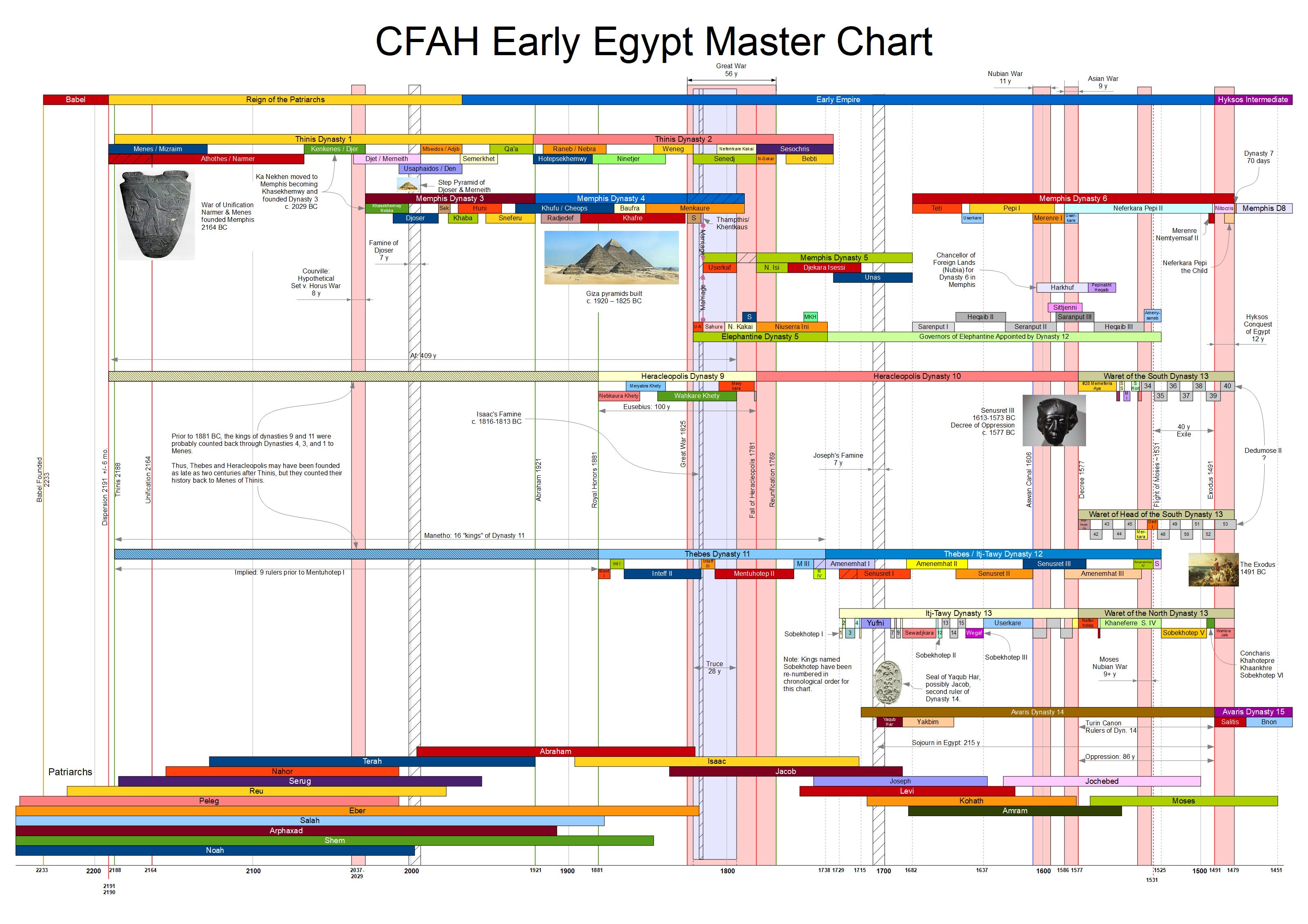
Darrell K. White and I have published the next paper in the Chronological Framework of Ancient History series, entitled “The Pharaohs of the Sojourn in Egypt.” This paper compares four popular Exodus chronologies and evaluates them based on criteria from the Scriptural and extrabiblical source texts about the Sojourn of the Israelites in Egypt.
The Chronologies We Compared
In this paper we looked at four somewhat complete chronologies of the Sojourn in Egypt. These included:
Imhotep - as- Joseph
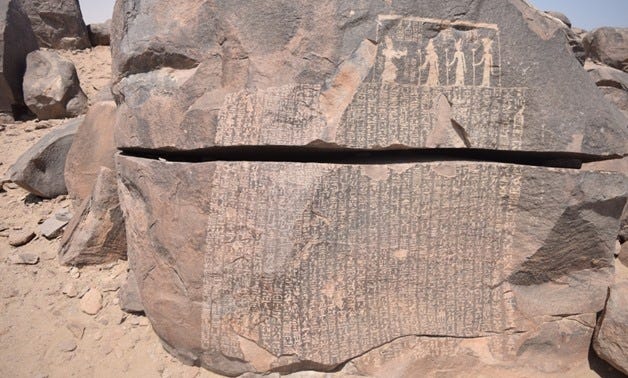
Long, Habermehl, and Porter all identify Djoser as Joseph’s pharaoh because of a stela inscription saying the famine lasted seven years. Scholars in this school tend to identify the long-lived Pepi II as the Oppression Pharaoh, and his short-lived son, Merenre II as the Exodus Pharaoh.
“Early” Exodus
Associates for Biblical Research scholar, Douglas Petrovich, and the Armstrong Institute have published two variations of the “Early Exodus” theory, where they date the Exodus to 1446 BC, and identify the Exodus Pharaoh as Amenhotep II of the 18th Dynasty. We put “early” in quotes because Ussher’s Exodus date of 1491 BC is the traditional Christian position. The “Early Exodus” theorists only compare themselves to the “Late Exodus” position, while ignoring the Ussherian position which is another 45 years earlier.
Late Exodus
The Late Exodus position was popularized by Flinders Petrie, William Albright, Kenneth Kitchen and James Hoffmeier. It assumes that since the city the Israelite slaves built was named “Pi Rameses” that therefore the Pharaoh had to be Rameses II. This simplistic position assumes Egyptian chronology is correct, and that Scriptural chronology is merely symbolic. Thus they place the Exodus in 1286 BC, which leaves only 319 years for the entire period between the Exodus and the founding of Solomon’s Temple.
Chronological Framework of Ancient History (CFAH)
This position is the one defended by Kenneth Griffith and Darrell K. White. It argues that Ussher’s chronology of the Bible is correct, and the problem is with Egyptian chronology. This position contends that the Middle Kingdom of Egypt (Dynasties 11-13) was contemporary with the latter part of the Old Kingdom of Egypt (Dynasties 1-6).
We identify Khufu as the pharaoh who took Abraham’s wife, Sarah; Senusret I as the famine pharaoh of Joseph; Senusret III as the Pharaoh who knew not Joseph and decreed the deaths of the baby boys; Pepi II as the long-lived Oppression Pharaoh who sought the life of Moses; and his son, Merenre II as the Pharaoh who opposed Moses and died in the Red Sea.
The entire paper is about 80 pages and can be viewed at the link below. (You must be logged into Academia.edu for the link to work.)