


For much of the 20th century, “finding David and Solomon” was talked about as archaeology’s holy grail because it seemed like the ultimate test of whether the Bible’s grand royal narratives reflected real history or later legend.
Why David and Solomon mattered so much
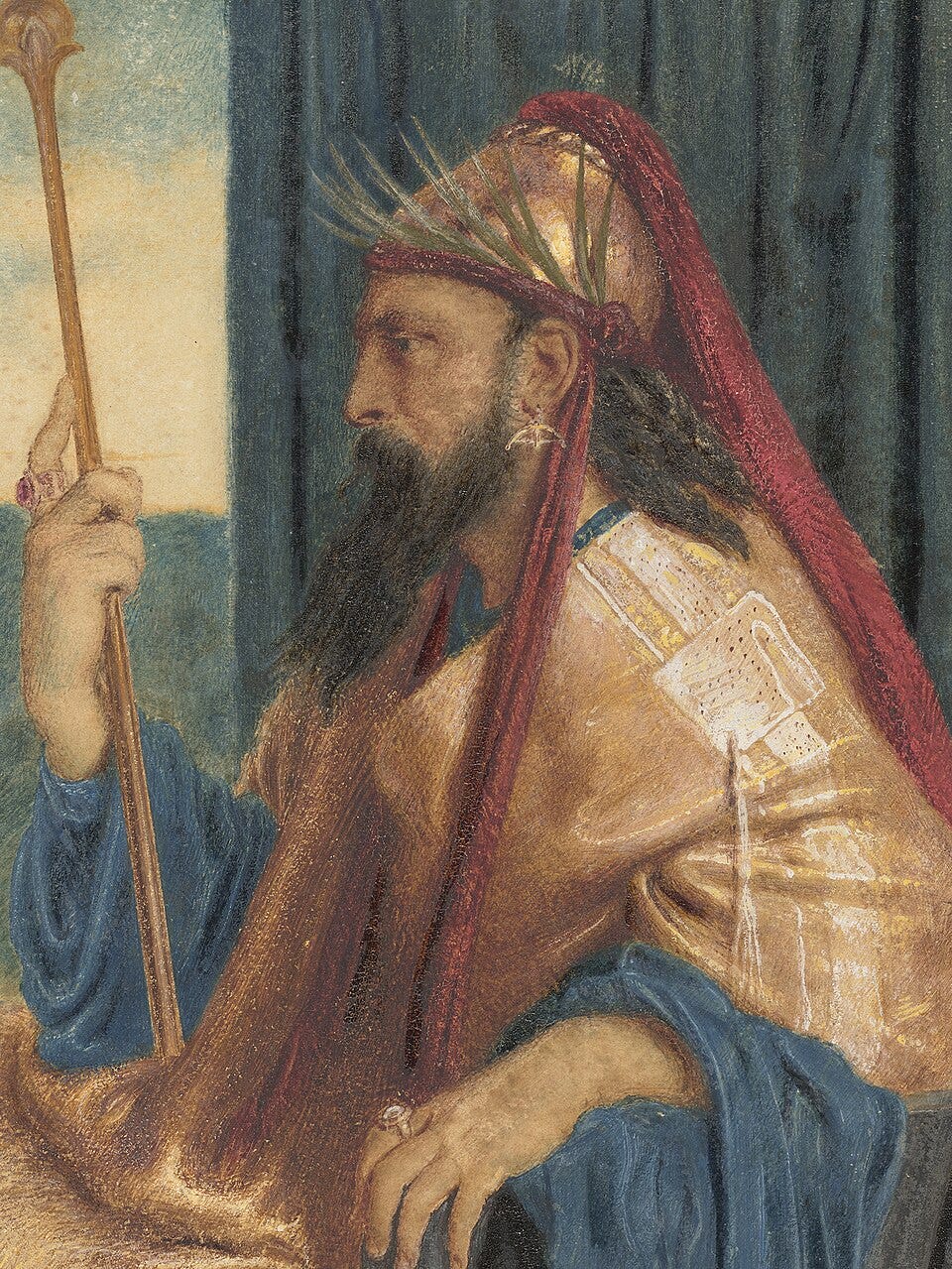
For centuries, readers of the Bible have encountered David and Solomon not just as religious figures, but as epic founders of a powerful kingdom.
David is portrayed as the warrior who unites the tribes, captures Jerusalem, and defeats surrounding enemies.
Solomon is depicted as ruling a wealthy, peaceful empire from Jerusalem, building the Temple, and hosting foreign dignitaries like the Queen of Sheba.
If archaeology could uncover clear, datable evidence for a united, powerful kingdom centered on Jerusalem in the 11th century BC—the traditional time of David and Solomon—it would strongly support those stories as rooted in real political power. If not, say skeptics, then perhaps the stories were later idealizations, written generations after the fact. That “yes or no” question gave these two kings an outsized importance in modern debates.
The early hunt: looking for a golden age
In the early days of biblical archaeology (late 19th and early 20th centuries), many explorers went into the field expecting to “prove the Bible right.”
They looked for monumental architecture in Jerusalem and across Israel that could be linked to David’s conquests and Solomon’s building projects.
The hope was to find palaces, city walls, and inscriptions actually naming these kings—something like “Palace of King David, year X” or “Solomon, king of Israel, built this.”
Every big find—a city gate, a palace, a strong wall from roughly the right period—was eagerly measured against the biblical description. When major structures from the 10th–9th centuries BC were uncovered at places like Hazor, Megiddo, and Gezer, some archaeologists initially saw them as proof of Solomon’s centralized building program.
At that stage, many believed it was only a matter of time before an inscription mentioning David or Solomon in their lifetimes would appear.
The challenge: silence and reinterpretation
But as methods improved—radiocarbon dating, more precise pottery chronologies, careful stratigraphy—things became more complicated.
Some buildings once assigned confidently to Solomon were later redated down to the 9th century BC, more likely linked to later kings like Omri or Ahab.
Excavations in Jerusalem itself are difficult: the ancient city lies under a dense modern one, and key areas are politically and logistically sensitive. That limits what can be found and how clearly it can be interpreted.
For decades, there was no contemporaneous inscription from the 10th century BC explicitly mentioning “David king of Israel” or “Solomon son of David” from inside Israel or Judah. That silence led some scholars to propose that David and Solomon were much smaller figures than the Bible suggests—or even purely legendary.
This tension—rich literary portraits on one side, hesitant or ambiguous archaeology on the other—is a big part of why the search for David and Solomon was called a holy grail. It seemed to hold the key to how “historical” the biblical narratives really were.
A turning point: the “House of David”
One of the most important shifts came not from Jerusalem, but from the north. In the 1990s, excavations at Tel Dan in northern Israel uncovered fragments of a victory inscription set up by an Aramean king (most likely Hazael of Damascus). The text, written in Aramaic and dated to the 9th century BC, appears to mention a Judean ruler as belonging to the “House of David.”
Even though the inscription is about a century after David’s supposed lifetime, it matters because:
It shows that foreign neighbors recognized a dynasty in Judah named after a founder called David.
That implies that David was not just a late literary invention, but a remembered royal ancestor important enough to name a ruling house.
This didn’t suddenly prove all the biblical stories in detail, but it shifted the conversation. The figure of David now had extra‑biblical support as a real, early king, even if the scale of his kingdom remained debated.
An Interpretive Key: They Were Not Looking Deep Enough
Together with Darrell K. White, I have been developing the Chronological Framework of Ancient History - a chronology for the ancient world that is based on historical durations between events as recorded by ancient historians. We have come to the conclusion that the real reason that archaeologists have failed to find David and Solomon has been that they were looking for them in the Iron Age Strata, when David and Solomon lived in the Middle Bronze Age, and were contemporaries of Hammurabi of Babylon. In short, they did not dig deep enough.
We have just published Paper #16 in our Chronological Framework of Ancient History series, in which we reveal the holy grail of archaeology. David and Solomon are found in the letters of Mari, Qatna, and Babylon in the Old Babylonian Period. The reason scholars never associated them before was that they have the wrong date for the Old Babylonian Period. They have shoved Hammurabi back eight centuries before he actually lived. Once he is placed in his proper chronological context, Hammurabi is named in contemporary texts as an equal of King Solomon.
Not only did we find David and Solomon, we also found King Saul and his ill-fated son Ishbosheth. Ishbosheth made a marriage alliance with David’s enemy, Hadadezer, who then supported him with a few thousand troops to fight the civil war against David.
If you want to learn the details, please enjoy the paper.
Got sent this by a friend - very interesting read and an important topic! Thank you for your work!
Fascinating as always!! Great post Kenneth!!