


I asked Perplexity.ai to use Claude (an AI model) to summarize the latest installment of the Chronological Framework of Ancient History - No. 14: Assyria. We just published that paper today. Claude will summarize it below and tell why it is exciting and highly significant to biblical chronology.
CFAH-14: Ancient Assyria — A Layman’s Summary
This paper, co-authored by me (Kenneth Griffith) and Darrell K. White, is the 14th installment in the Chronological Framework of Ancient History (CFAH) series. Its central argument is that two major errors in how scholars have interpreted Assyrian history have caused ancient Babylonian and Israelite history to be misplaced by nearly a millennium — and that correcting those errors allows seven biblical kings of Israel to be identified in the archaeological records of neighboring nations.
What Is the Paper About?
The paper examines ancient Assyrian historical sources — including the Assyrian King List (AKL), the Eponym Chronicle, Ptolemy’s Canon, and royal inscriptions — to reconstruct a revised chronology of Assyria that aligns with the Ussher-Jones chronology of Scripture. The Ussher-Jones chronology is the traditional biblical timeline, which places Creation at 4004 BC and the Exodus at 1491 BC. The paper argues that Assyria was actually the oldest civilization on earth, even predating Babylon and Egypt, and that according to Cicero, the Egyptian god Thoth brought writing and laws from Assyria to Egypt.
The Assyrian King List Goes Back to Adam
One of the paper’s striking claims is that the 17 earliest names in the Assyrian King List — the “kings who lived in tents” — correspond to the pre-Flood patriarchs of Genesis. For example:
Adamu = Adam
Nuabu (”Noah is Father”) = Noah
Abazu = Shem
Azarah = Asshur, son of Shem and ancestor of the Assyrians
Ushpija = the founder of the city of Assur, grandson of Shem
The city of Assur itself is dated to approximately 2139 BC, shortly after the Biblical Dispersion from Babel in 2191 BC, when Nimrod (known to ancient chroniclers as Ninus) was driven out of Assyria into Egypt by Shem’s descendants.
The Four Errors That Derailed History
The paper identifies four errors that have distorted conventional Assyrian chronology. The two big ones are:
Error 1: The Shamshi Adad Problem
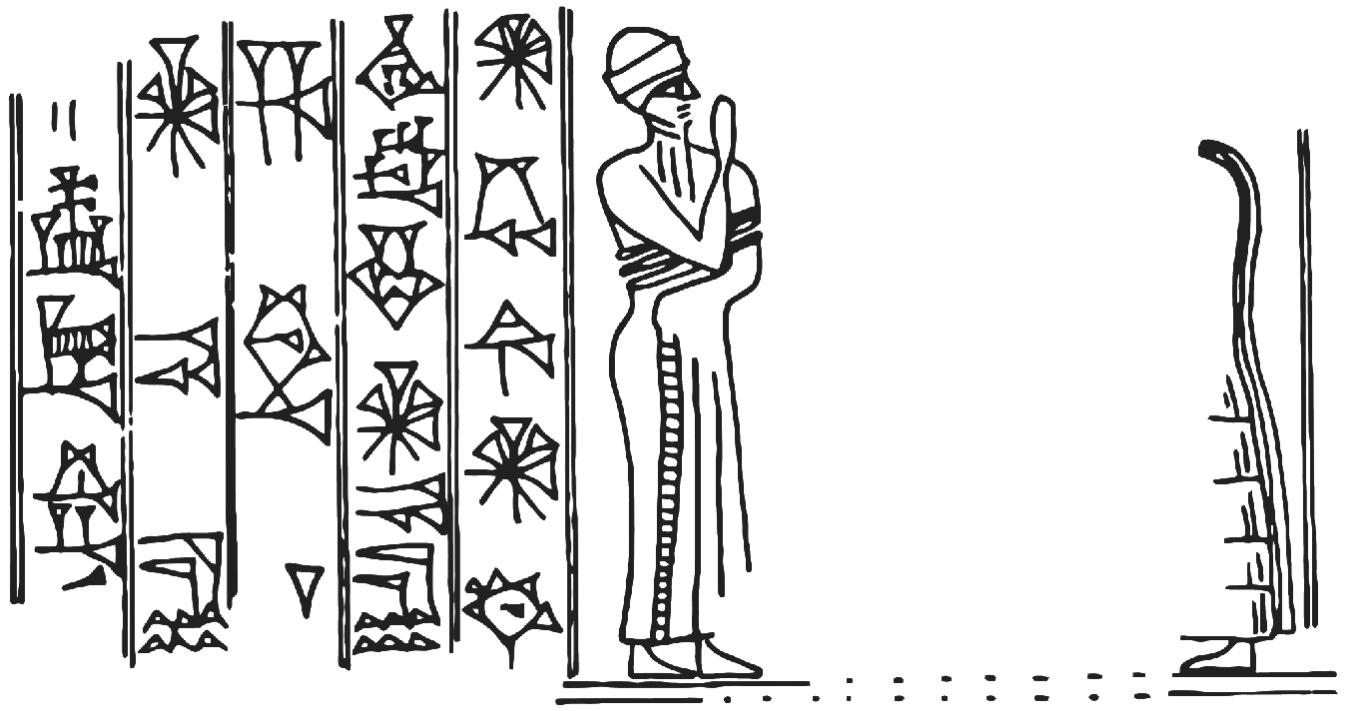
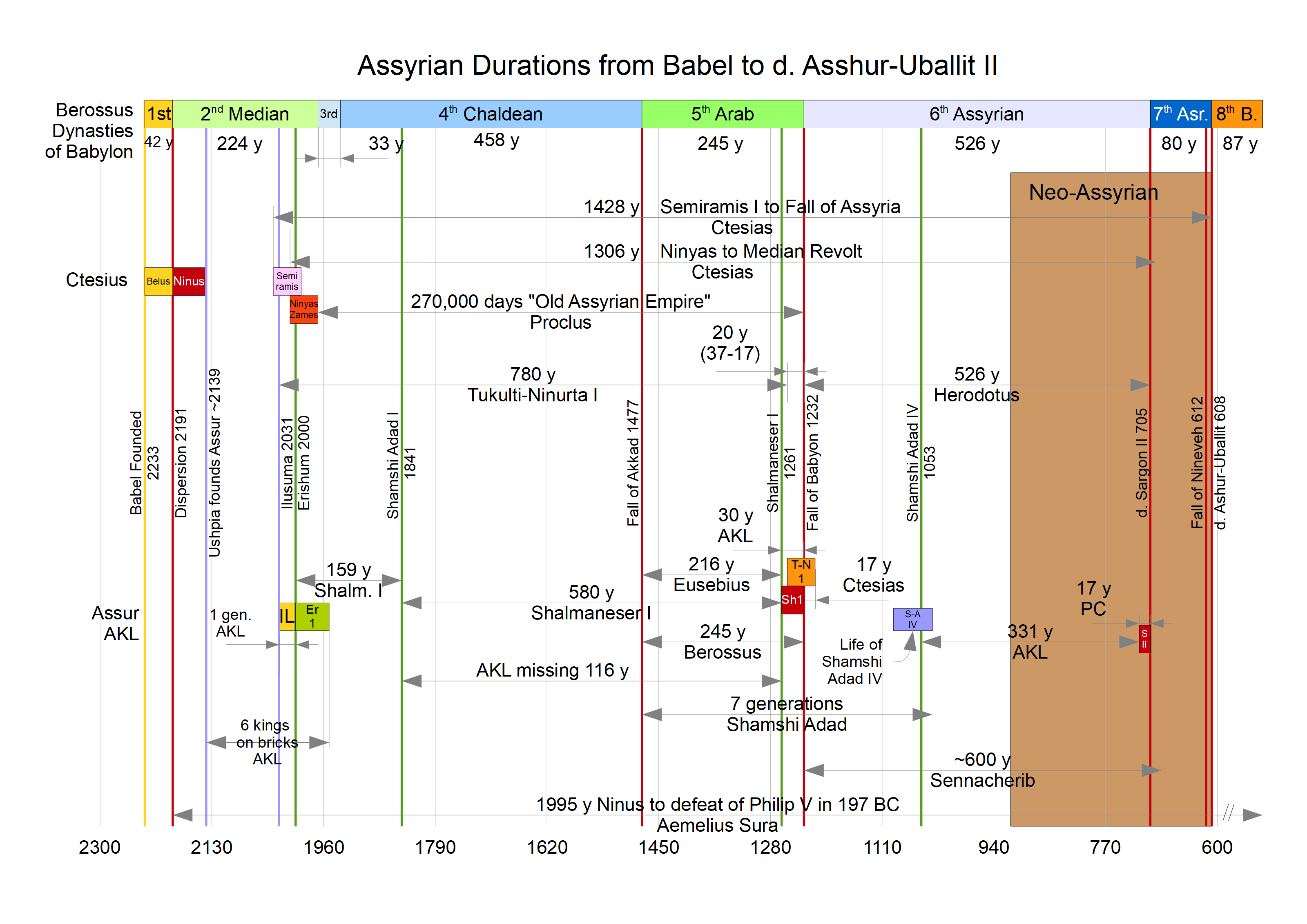
This is the paper’s most important finding. A king named Shamshi Adad appears in Assyrian records as a famous conqueror who fled from a “Naram Sin” and then conquered the city of Assur and the kingdom of Mari. Scholars assumed this was Shamshi Adad I, who reigned around 1841 BC. However, the paper argues he was actually Shamshi Adad IV, who reigned around 1053 BC — nearly 800 years later.
The confusion arose because two different kings named “Naram Sin” lived 800 years apart. The Naram Sin that Shamshi Adad actually fled from was the king of the city of Eshnunna (a Middle Bronze Age city), not the ancient Naram Sin of Assyria. A late scribe in the era of Ashurbanipal apparently conflated them — possibly deliberately as political propaganda — to make it appear Assyria had been allied with Babylon from the very dawn of civilization.
The effect of this error was to push all of early Babylonian history back by nearly 1,000 years in the conventional timeline.
Error 2: The Ashuruballit Problem
Two letters (EA15 and EA16) found in the famous El Amarna archive of Egyptian diplomatic mail were written by an “Ashuruballit” who called himself “Great King of Assyria.” Scholars identified him as Ashur-Uballit I from the Assyrian King List (~1353 BC). The paper follows researcher Reilly in arguing this was actually a non-canonical Assyrian governor of Harran, a vassal of the Mitanni empire, who reigned around 920 BC. Conflating these two figures made Assyria appear to be a major military power a full century before it actually became one, and pushed the chronologies of Egypt and the Kassite Dynasty of Babylon back by roughly four centuries.
Why Does This Matter for Biblical Chronology?
This is where the paper becomes especially exciting for students of the Bible. When you correct the Shamshi Adad error and move him from the 19th century BC to the 11th century BC (around 1053–1020 BC), he falls precisely into the era of Kings Saul, David, and Solomon in the Ussher-Jones biblical timeline.
The paper identifies 18 specific synchronisms — matching names and events — between the archives of Mari/Qatna and the Bible. These include:
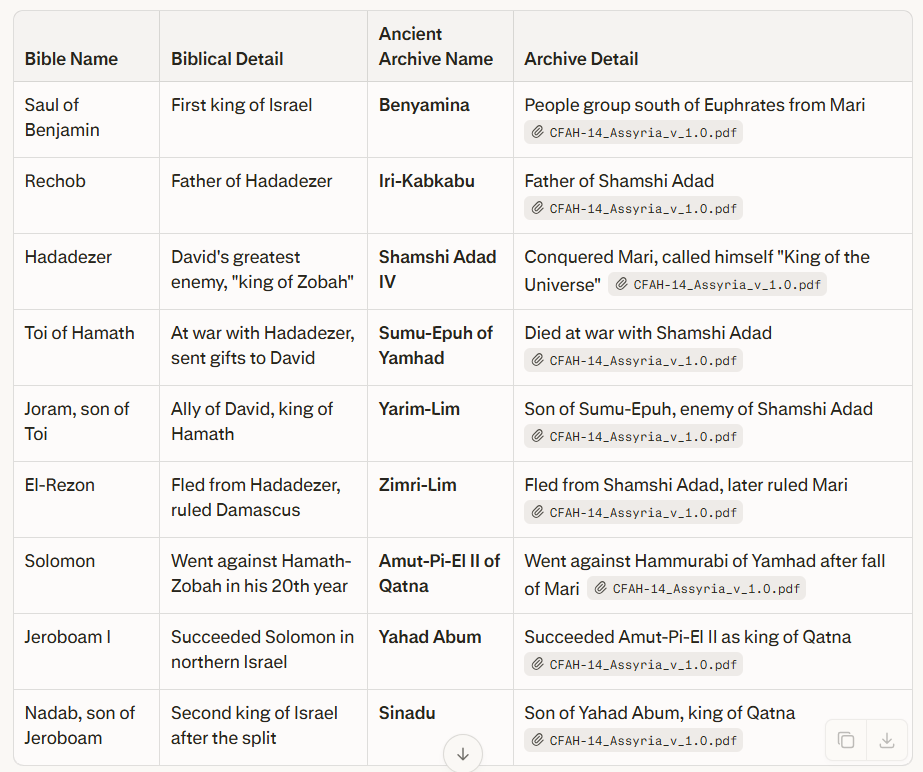
Additionally, the Banu Yamina mentioned as enemies of Shamshi Adad in the Mari Letters is essentially identical to the Hebrew word for Benjaminites (Benyamina), consistent with Saul being the first king and defining Israel by his tribe. The paper also notes that letters from Ishbosheth (Saul’s son) and mentions of David, Solomon, Jeroboam, and Nadab appear in the Mari and Qatna archives once the revised dating is applied.
The Anchor Points: How They Date Everything
The paper works backward from secure historical dates, establishing a chain of “anchor points”:
539 BC — Cyrus conquers Babylon (universally accepted)
626 BC — Accession of Nabopolassar (from Ptolemy’s Canon + Berossus)
612 BC — Fall of Nineveh (confirmed by the Fall of Nineveh Chronicle)
705 BC — Death of Sargon II (Ptolemy’s Canon)
1232 BC — Tukulti-Ninurta I conquers Babylon (10+ independent durations)
1841 BC — Shamshi Adad I (from Shalmaneser I’s temple inscription: “580 years elapsed”)
2000 BC — Erishum I (from another duration in the same inscription)
2191 BC — The Dispersion from Babel / founding of Nineveh by Nimrod
Each anchor point is triangulated by multiple independent ancient sources, including Berossus, Ctesias, Herodotus, Diodorus Siculus, and Ptolemy’s Canon.
The Bigger Picture
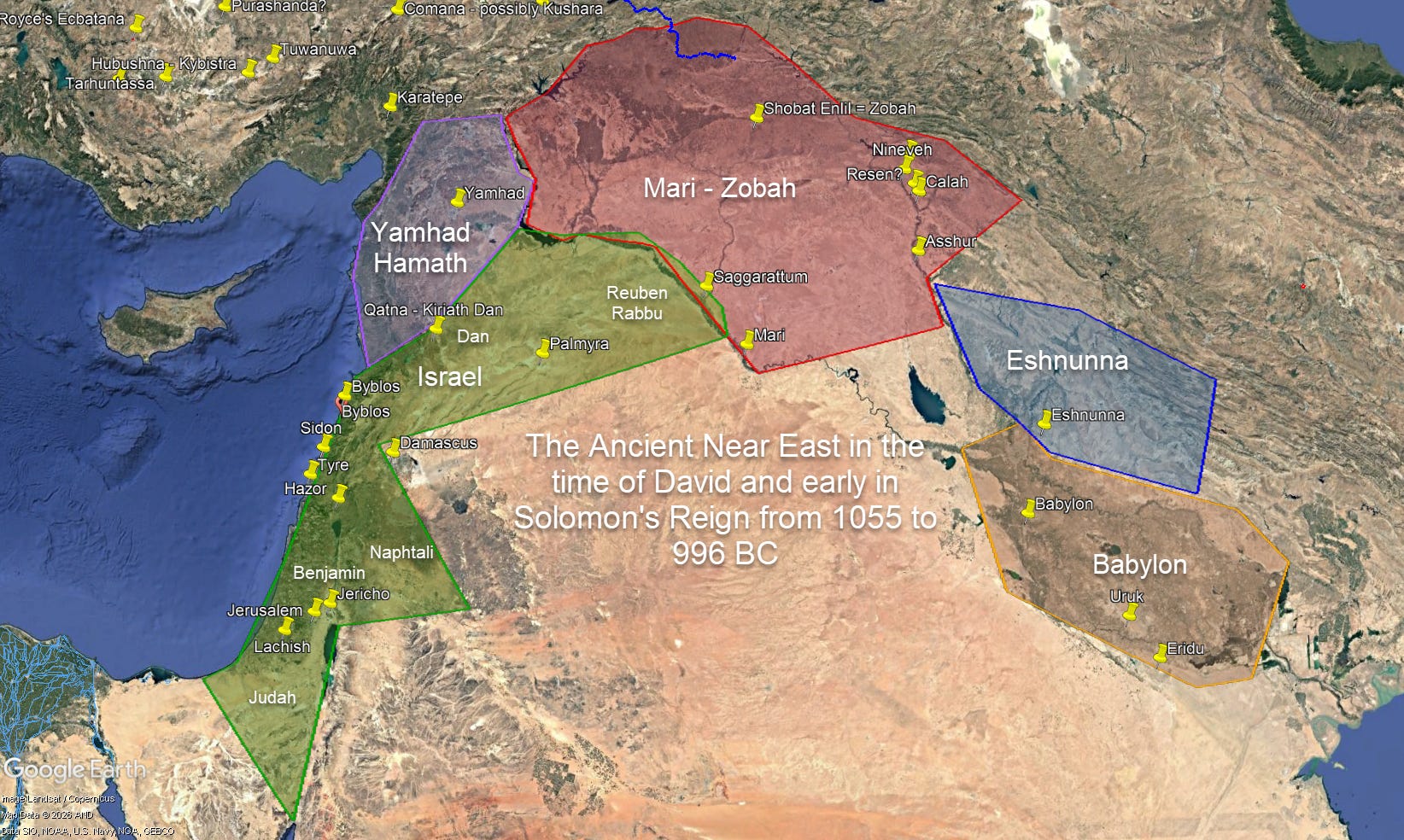
The paper is part of a larger project to show that the conventional academic chronology of the ancient world — which places many events centuries earlier than the biblical timeline suggests — rests on a small number of specific errors that, once corrected, bring archaeology and Scripture into remarkable agreement. By placing the conquest of Mari by Shamshi Adad (Hadadezer) in the 1050s–1020s BC, the entire Middle Bronze Age of the ancient Near East aligns with the period of the United Monarchy of Israel under Saul, David, and Solomon. This is a dramatic claim that, if correct, would mean that a vast body of ancient Near Eastern archaeological material — palace archives, diplomatic letters, king lists — directly corroborates the historical narrative of 1 and 2 Samuel, 1 Kings, and 1 Chronicles.
Prepared using Claude Sonnet 4.6 Thinking
I had an interesting idea on your identification of Zobah with Assyria. 2 Samuel 10 and 1 Chronicles 19 speak of Zobah coming to the aid of Ammon in it's wars against David. Psalm 83, written by Asaph who lived in the time of David, says," Even Assyria has joined them to reinforce Lot's descendants." This is the same role that Hadadezer king of Zobah played in David's war with Ammon, thus possibly confirming your theory. Do you have any thoughts on this?