


Last week we published paper #17 in the Chronological Framework of Ancient History series: “The Ancient Chronologies of India and China.” (You have to be logged into Academia.edu for the link to work.) In that paper we found that the traditional Chinese chronology of their three ancient dynasties, the Xia, Shang, and Zhou, places the reign of their first king, Yu, in 2191 BC, the same year that we found other cultures placed the Dispersion from Babel.
Furthermore, the transition from the Xia to the Shang Dynasty can be precisely dated by correlation to Joseph’s Famine. The following summary is derived from Sima Qian’s Shiji (Allen 1894).
The final years of King Jie’s reign over the Xia were marked by cascading natural disasters that his misrule left him powerless to manage. Ancient records note that the last years of his rule brought extreme weather — ice forming on summer mornings, unseasonable frosts in July, heavy rains that collapsed buildings, and catastrophic crop failures that left his people without food. Jie had squandered his realm’s resources on extravagant personal display: demanding exotic foods from the four corners of the empire, building elaborate palaces for his concubines, and treating his subjects with merciless cruelty whenever they failed to satisfy his excesses.
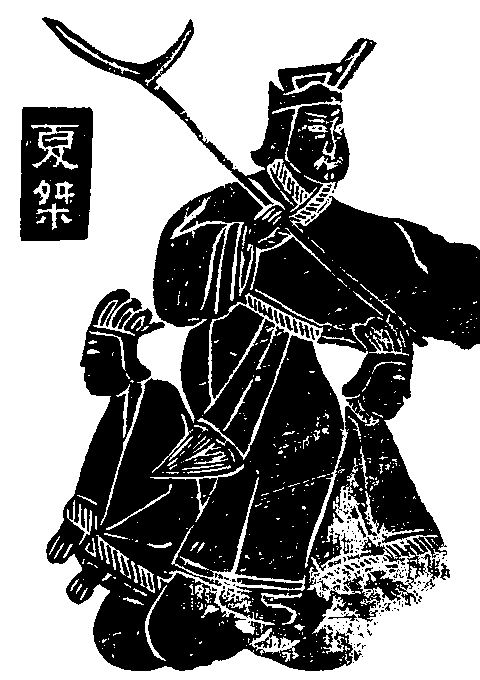
The Shang kingdom, under its leader Tang, had meanwhile been doing precisely the opposite — encouraging agriculture, lowering taxes, building alliances with disaffected states, and cultivating talented ministers. When Tang’s chief counselor Yi Yin — who had spent years in the Xia capital as a spy and envoy, observing Jie’s weakness firsthand — finally judged the moment right, Tang declared war. At the Battle of Mingtiao, fought during a thunderstorm, Jie’s demoralized army was routed. Jie fled, was captured, and was eventually exiled to Nanchao, where he died of illness — and the Xia dynasty ended with him.
According to the Bamboo Annals and other sources, the early years of Tang’s own reign as the first Shang king were plagued by five consecutive years of drought. Tang responded with a dramatic act of selfless leadership: rather than increasing taxes or conscripting labor, he minted gold coins and distributed them to impoverished families who had been forced to sell their children into bondage during the famine, so they could buy them back. Most strikingly, Tang — according to later tradition — is said to have gone to a sacred mulberry grove, cut his hair and nails in a gesture of self-abnegation, and offered himself as a sacrifice to Heaven to pray for rain on behalf of his people. The story became one of the defining moral exemplars of the Confucian tradition: a ruler who considered his people’s suffering his own personal responsibility, and who earned the restoration of Heaven’s blessings through humility rather than force.
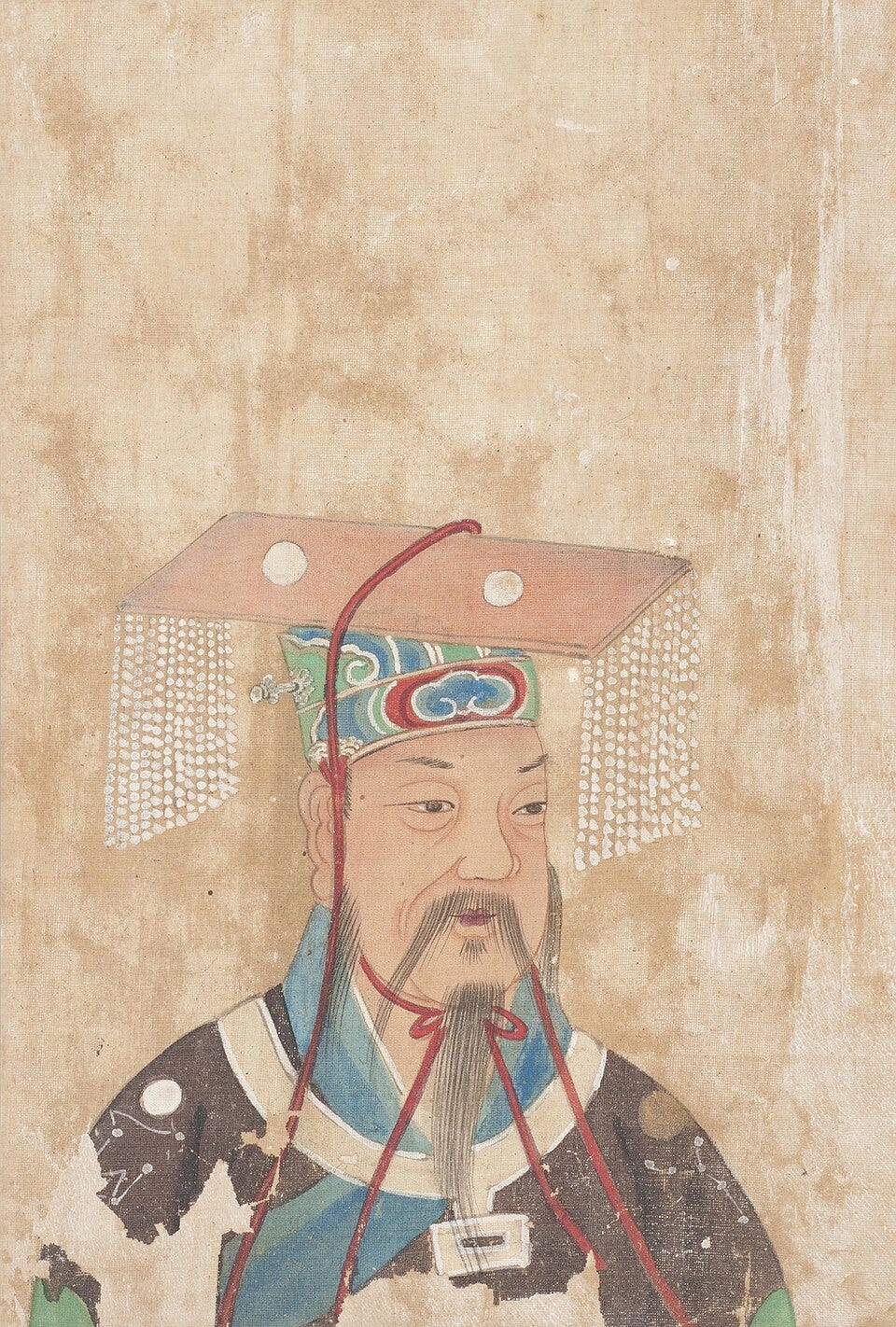
Across virtually every major ancient text — the Shiji, the Shangshu, the Bamboo Annals, the Zuozhuan, the Guo Yu, and even newly unearthed Warring States bamboo slips from Tsinghua University — the account is the same: Tang (湯), first king of Shang, defeated the tyrannical last Xia king Jie (桀) at the Battle of Mingtiao, drove him into exile, and founded the Shang dynasty in his place. The Tsinghua Bamboo Slips, discovered only in 2008 and dated to the 4th century BC, add the detail that Yi Yin — Tang’s minister — played a key role in the overthrow, and these correspond closely to older transmitted texts (Foster 2021). The Shanghai Museum bamboo slips independently list 16 Xia rulers following Yu, consistent with the Shiji genealogy. Therefore, the story has multiple sources, is internally consistent, and is attested across independent textual traditions spanning at least seven centuries of pre-imperial writing.
We can recognize the climate disasters in the reigns of Jie and Tang as the seven year famine described in Genesis, which lasted from 1708 to 1701 BC. It was probably caused by a supervolcano eruption, which is consistent with the summer frosts described in the Chinese account of the fall of Jie. It appears that King Tang overthrew Jie in the same year that Jacob entered Egypt, 1706 BC, as the famine lasted for five more years into Tang’s reign.
Great stuff. I have a question. I’ve recently been reading books such as “Ancient China’s Hebrew Connection” by Ryan Steed Parks, “Genesis and The Mystery Confucius Couldn’t Solve” and “God’s Promise to the Chinese” by Ethel R Nelson, “The Gospel Hidden In Chinese Characters” by Timothy D Boyle, and “Faith of Our Fathers: Finding God in Ancient China” by Chan Kei Thong. I must admit that it seems very compelling, that is, that the Israelite exiles arrived at “Sinim” (Isaiah 49:12) and that the Chinese New Year is the Hebrew Passover (also Feast of Unleavened Bread), and that even before then they shared many beliefs, suggesting a common source (Noah), that ShangDi is certainly YHWH the God of Israel, and that also that the Border Sacrifice recalls the gate of Eden where sacrifice was offered. If you’ve already examined these claims, what do you think of these conclusions? Are they legitimate and do you think it’s true?
Brilliant as always.