


Diodorus Siculus was a Greek writer from Sicily in the first century BC who set himself a grand task: to tell the story of the whole world, from mythic beginnings down to his own day, in one enormous “Library of History.” For non‑specialists, his work matters less as a name to memorize and more as a reminder that much of what we know about the ancient world survives only because one determined compiler chose to copy and organize it.
Who Diodorus Was
Diodorus came from Agyrium in central Sicily, a region shaped by Greek, Carthaginian, and Roman power. He lived roughly between 80 and 20 BC, when the Roman Republic was turning into the Roman Empire. He travelled widely, including stays in Rome and perhaps Egypt, gathering material for his history over many years.
He was not a famous statesman or general, and he did not participate personally in the big events he describes. Instead, he was a patient collector of other people’s accounts, trying to weave them into a single continuous narrative. In that sense, he is closer to an encyclopedist than to a modern investigative journalist.
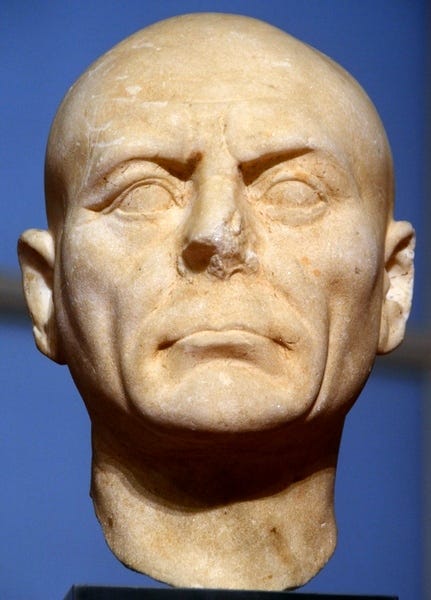
The “Library of History”
Diodorus’s work is usually called the Bibliotheca Historica or “Library of History,” and it originally filled forty books. Only fifteen survive complete today: Books 1–5 and 11–20, with fragments and quotations from the others preserved in later writers.
He divided his universal history into three broad parts.
Books 1–6 covered the myths and early histories of both non‑Greeks and Greeks, up to the Trojan War.
Books 7–17 carried the story down to the death of Alexander the Great in 323 BC.
Books 18–40 took it from there to roughly the time of Julius Caesar’s campaigns in Gaul.
The surviving books are uneven in content but remarkable in scope. Book 1, for example, is devoted almost entirely to Egypt and is one of the fullest ancient literary accounts of Egyptian history and customs after Herodotus. Books 2–5 range from Mesopotamia and India to North Africa, Greece, Europe, and various islands, mixing legends, geography, and cultural description. Books 11–20, which are complete, offer a year‑by‑year account of Greek and Mediterranean history from the Persian Wars in 480 BC down to 302 BC, the era of Alexander and his successors.
How He Worked
To write a “library” of world history, Diodorus relied heavily on earlier authors whose works are now lost. For Greek history he drew especially on Ephorus (for the period 480–340 BC) and Hieronymus of Cardia (for Alexander’s successors), while for Roman affairs he made use of Polybius and Posidonius.
He tells us that each book opens with a preface explaining why history matters and what the book will cover, and then he proceeds either region by region or, in the later part, year by year. In the early books, he sometimes arranges material geographically and admits that exact dating for “barbarian” peoples and very early times is hard or impossible. From roughly Book 11 onward, he adopts an “annalistic” structure: for each year, he reports events across the known world before moving to the next year.
Modern scholars note that Diodorus is not a brilliant analyst or stylist by ancient standards. His value lies instead in his choice of sources and his habit of reproducing them fairly faithfully. As one modern assessment puts it, he is “as good as his sources,” and he usually chose good ones.
Why His Work Matters
For a lay reader, it can be hard to see why a somewhat plodding compiler deserves much attention. The answer is simple: if Diodorus had not written, large parts of ancient history would be almost invisible to us.
For the “classical” Greek period, the surviving Books 11–20 are the only continuous Greek narrative of events from 480–302 BC. Other great historians—Herodotus, Thucydides, Xenophon—cover parts of that span, but Diodorus stitches it together into an unbroken story, especially valuable for stretches where other sources fall silent.
For the age of Alexander’s successors (the Diadochi), his books based on Hieronymus of Cardia make him the chief literary authority. Without him, the political and military struggles that shaped the Hellenistic kingdoms would be far less clear.
For Sicily and the western Greek world, his narratives are irreplaceable. Scholars have remarked that a connected history of Sicily would hardly be possible without Diodorus’s information.
For Egypt, Book 1 preserves a long, coherent account of religion, customs, and royal traditions that complements and sometimes updates Herodotus. That makes him important not just to classicists but to historians of ancient Egypt and the broader eastern Mediterranean.
In addition, Diodorus sometimes preserves documents, speeches, and local traditions that do not survive elsewhere. His “fasti”—lists and notices of Roman magistrates and events—are recognized as among the oldest and most trustworthy such records. In many cases, when modern historians try to reconstruct a battle, a treaty, or a political crisis, Diodorus is one of the few narrative voices they can still consult.
The Broader Value for Us
Beyond the technical value for specialists, Diodorus matters for how we think about history itself. First, his project is an early example of “world history”: he wanted to show how the stories of Egyptians, Assyrians, Greeks, Romans, and many others formed one interconnected human past. That ambition echoes modern efforts to write global histories rather than isolated national stories.
Second, he begins his work by defending the importance of studying history at all. In his prologues, he argues that history provides moral examples, practical lessons, and a kind of collective memory that helps later generations avoid old mistakes. Even if we might frame the benefits differently today, the basic idea—that knowing how people acted before us can guide how we act now—remains recognizable.
Third, Diodorus reminds us how fragile our access to the past is. A complete copy of his forty books still existed in Constantinople in the 15th century, but it was lost when the city fell in 1453. What we read today survives thanks to a chain of 59 medieval manuscripts, many of them preserving only selected groups of books. His “Library” thus becomes a symbol of historical memory itself: partial, vulnerable, and dependent on the efforts of copyists, editors, and readers across centuries.
Finally, Diodorus offers a useful illustration of how history is made. He did not witness the Persian Wars or Alexander’s campaigns; he assembled earlier writings, weighed them as best he could, and arranged them into a narrative others could use. Modern historians, armed with more tools and stricter methods, still do something similar: they sift surviving evidence, most of it created by others, and try to construct a coherent picture.
For lay readers, then, the importance of Diodorus Siculus is twofold. His Library of History is one of the largest surviving bodies of ancient Greek historical writing, an essential source for key periods, regions, and cultures. At the same time, his work shows how much our understanding of antiquity depends on a few determined individuals who chose to gather, preserve, and organize the stories of their world for future generations.